Environmental issues
![]()
© image100The demand for images of this subject, we predict, will escalate greatly due to mounting awareness of environmental changes. We are receiving daily scientific evidence indicating ongoing damage to the environment and changing global weather patterns. Increasingly many corporations and companies have introduced Corporate Social Responsibility policies which aim to reduce their negative impacts on the environment.
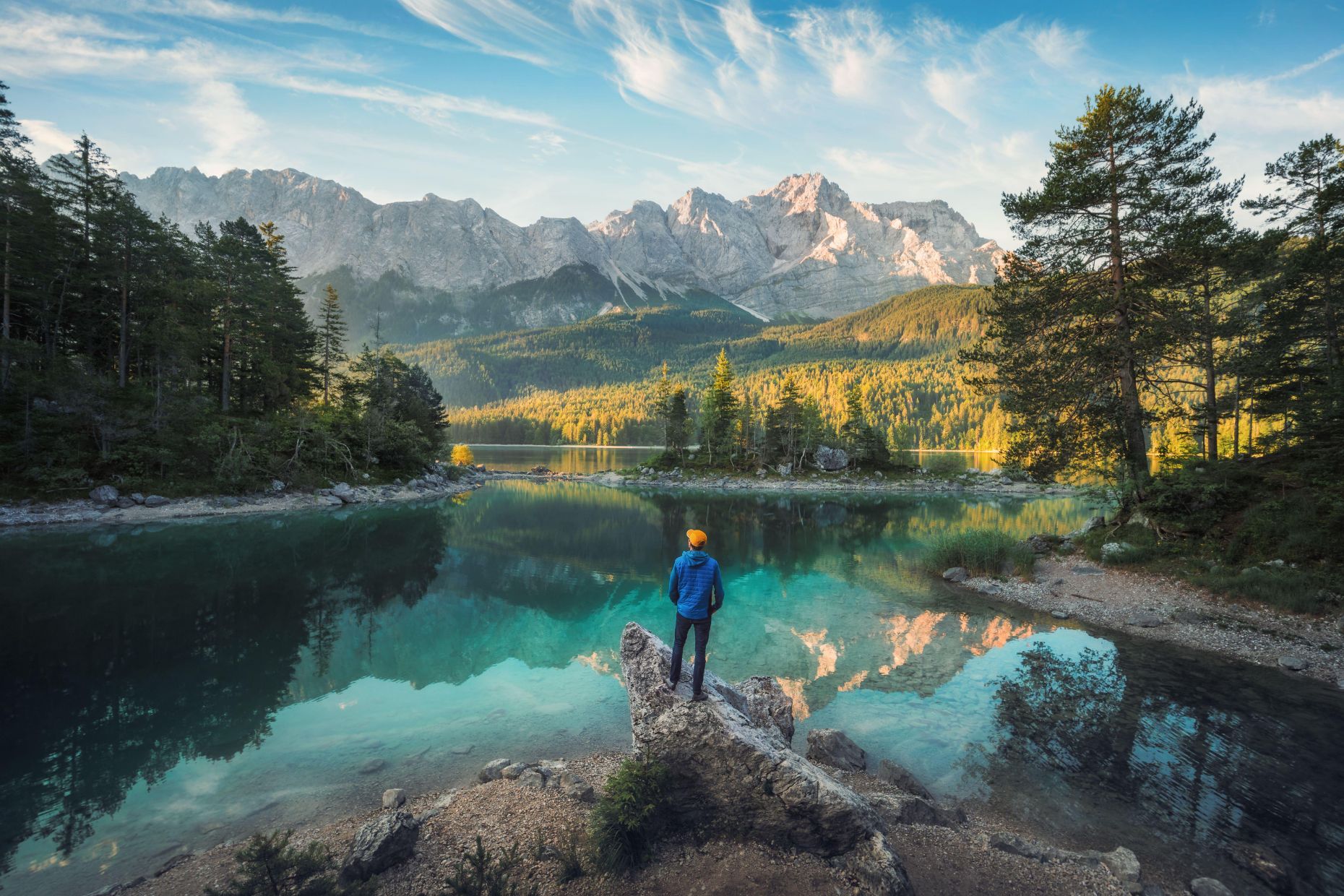
Landscape, urbanscape and nature photographers can also be involved in the role of documenting changing landscapes and nature, some which may disappear and be replaced with new landforms as well as images that reveal the pristine beauty of nature.
Nick Cobbing
- Develop your own style; don’t be ruled by the demands of the stock photography market. The best and certainly the most timeless photographs are usually those we believe in ourselves, rather than those we have taken to conform to a perception of what the market requires.
- Get away from the ‘news’ agenda, it’s very tempting to try and cram everything into one picture thus competing with the wires. Instead imagine you are making work for a book or a gallery show. Build the work with repeated trips, step by step, it’s not always possible to do it in one shoot.
- Cultivate links with campaigners and press officers in NGOs, but appreciate they are often understaffed, overworked and under-funded. However large your budget you can’t make a start without access and often these people are the key to that. The chances are that an NGO was working on your story a long time before you, respect that and they may share some of their valuable research and contacts with you.
- Spend as much or more time reading books, magazines and looking at relevant websites as you do taking pictures. Understand what the term sustainability actually means, what climate change actually represents. Use your understanding of current environmental events to predict the next environmental issue. The trend is not that difficult to work out.
- Concentrate more of your budget on research and travel than on new equipment, let your legwork and your ability to communicate and research make great pictures, rather than new lenses. Resist the temptation to talk about focal-length and vibration resistance, it rarely fits the terrain.
- Take heart if your pictures don’t sell so well, it may not be because of the quality of your output. The paradox is that photographs illustrating the effects of climate change square less easily with adverts for cars and low-cost flights. If not as good for your wallet as fashion and commercial work it‘s better for your soul. If you think it’s hard work read the (benchmark) book, Minamata by W. Eugene Smith and Aileen M. Smith for inspiration.
Jon Bower
As an environmental scientist and freelance professional photographer, I have been fortunate enough to straddle both worlds for many years. My environmental and photographic work is now inseparable. Everywhere I tackle environmental problems, my cameras go with me. In fact, my consultancy work has often taken me to parts of the world I couldn’t have dreamt of- as well as many places I couldn’t run away from fast enough!
So here are my top tips:
- Don’t be afraid to get up-close and dirty. You may well have to breathe or wade through… unpleasant substances… to get the shot!
- Try to show the effects on people directly by including them in-shot. Human landscapes can add a dimension to your environmental images. An example- a shot of a belching chimney can be fine, but a woman riding past on her bike, shrouded in a facemask, gives a completely different perspective on the problem.
- Get off the beaten track. Images of environmental degradation or poverty are rarely to be seen if you stay close to the tourists!
- Getting away from the tourists can raise a whole new set of problems. Security can then become a real concern, especially in countries where photographing industry, infrastructure or poverty is regarded as an unfriendly act by the authorities. Try to get permission, or you may even need a ‘minder’. But stay away from jail. You won’t enjoy it, trust me on this.
- Be careful, particularly in photographing areas where your camera or watch may cost enough to support a family for a year. Don’t be flashy, dress down, and try to establish a rapport with folk wherever possible; always be sensible- some areas are best avoided at all costs-getting the shot is not worth a mugging.
- Ugliness can be beautiful. You just have to learn how to see it. A glowering coke plant in Chongqing (China) poisoning the air for miles around can possess its own charm, just like a sweeping landscape. Really.
- If you’re still using film, you have problems. Buying or developing transparency film is a complete no-no in many countries; and flying anywhere now will get your film repeatedly irradiated, free of charge. Never argue with airport officials X-raying your beloved films to death; I tried it recently in Cambodia, and don’t wish to repeat the experience. Sorry, my advice now is to go digital and avoid the hassle altogether. Such is progress...
Roger Bamber
I have always loved environmental feature work - from documenting coastal erosion on the east coast of Britain for the Worldwide Fund For Nature and vanishing glaciers in Switzerland for the Guardian magazine (five mountains in a week - do not take heavy equipment!) to trying to show the relationship between a snail and a hedgehog (prickly...).
The bonus of this sort of photography is that it has an extra dimension. You’re doing challenging work and earning a fee but at the same time you’re getting an insight into how the world works, and afterwards you look at things with new eyes. You learn a lot and with luck you help other people to enjoy the same insights.
Top tips:
- Try to keep the equipment to a minimum. You always end up having to hike twice as far as you’d planned. Carry all the lenses you need, make do with one body.
- Listen to weather forecasts obsessively. I’ve usually got one or two projects on the go that will depend on a combination of nature (a certain plant flowering, a certain bird visiting) and weather conditions. Be prepared to drop everything and race to your target if the weather seems promising.
- Be prepared for the weather forecast to be wrong. Carry all-weather protective clothing in your car, including a mat to lie on in the mud.
- The perfect cloud can transform a landscape, as can that elusive ray of sunshine. Wait for hours for it if you have to. You can’t force these things so be prepared to come back and back and back if you want to show a natural feature at its best.
- Always try to compose your image with as much care as if you were photographing a movie star. Even a common frog looks stunning with the right light and the right setting.
Julio Etchart
- Have a good location ‘reconnaissance’ before actually starting the shoot. Look for unusual/interesting angles to go back to when the light is right.
- Lighting can be very tricky. In the tropics, early morning and late afternoon is when the best light is available. From 9 am to 4 pm, tropical light can be very harsh. Is best to find indoor or outdoor ‘controlled’ situations to photograph during those hours.
- Sometimes, during initial research into a trip, I am led to believe that, because a situation (eg. oil spill, burning of rain forest) sounds dramatic, the pictures are also going to be spectacular, only to be often disappointed when I arrive at the location and find very boring pictures to be taken! So I try to double check with more than one source the pictorial potential of the images I want to take, before committing myself to a trip. Remember that most locations are far away and difficult and expensive to get to, so is worth investing time in accurate ‘visual’ research before travelling.
- Even when shooting on digital, it is important to take some sturdy mechanical film cameras with you, since in some remote locations you can easily run out of power to recharge your batteries, and can also run out of card memory space. Also, batteries can be unreliable and stop working in the humidity of the rain forest and at some altitude. So it’s worth taking a range finder and/or mechanical SLR as backup, as well as a good supply of film.
- Treat your subjects with respect and dignity. They are part of the ‘environment’ too, and usually at the receiving end of ruthless plantation owners or greedy multinational corporations, and their everyday lives are very hard. Try to make them understand that you are trying to publicize their plight for survival to the wider world, and listen to their concerns. Try to spend as much time as you can in grassroots communities whether in remote rural areas or shantytowns. That will help you to cement a long term relationship that will also translate into better images and the potential for a follow up of your coverage in the future.
Brian Harris
Although not an environmental specialist photographer I am concerned that we as journalistic photographers do our bit to show up the way man has changed the planet. My tips are:
- Keep up to speed with current issues via editorial comment in Newspapers and on Radio and Television.
- Do your research, use the web and check out what else is available on Alamy and other sites and agencies.
- Look local. Every region has its problems, be it wind farms proposed or nuclear power stations that exist.
- Stop the car and get out and walk, you see more.
- If away on assignment to a different region to your normal patch, pick up the local paper and check out what the local issues are about.
- Photograph the ordinary, but photograph it interestingly. Roads and wizzy traffic, congestion, traffic jams. If you see a rubbish bin overflowing, snap it, if you see an abandoned car, photograph it. Dumped building waste in a lay-by. Don’t wait for ‘The Big One’ i.e. a massive oil spill, waste and environmental problems are all around us. Signage, or the overuse of signs in towns is a problem at the moment.
- As part of your pension plan go photograph your nearest Nuclear Power plant, wide and tight, upright and landscape, moody and clean. Nuclear is going to be one of this governments big issues.
- Don't wait for an assignment, just do it!!
Adrian Arbib
Most of my better work has been non commercial. As an example, I have campaigned for indigenous rights and have received the Cherry Kearton medal from the Royal geographical Society for my work.
- Work with an NGO (i.e. Oxfam, Christian Aid etc) as they can help you fast track into a story - a two way process because they get material that they need at a reduced price. So find an NGO that ties in with a story that you are doing.
- In Kenya / Sudan I was photographing the demise of pastoralism (herders) and Oxfam had quite a few projects linked to the issue. If you don’t do this, you are going in cold into a community without an introduction and people generally don't trust outsiders.
- The old ‘Capa’ adage ‘the closer you are, the better your pictures’ rings true. Spend time with your subjects...before getting out your camera.
- Carry a polaroid at all times. This way you can give back something. But be careful, it can create rivalries if one family gets all the polaroids!
- Learn a bit of the local language, after all we are in the business of communication.
![Alamy Images [home]](/images/alamy.png)